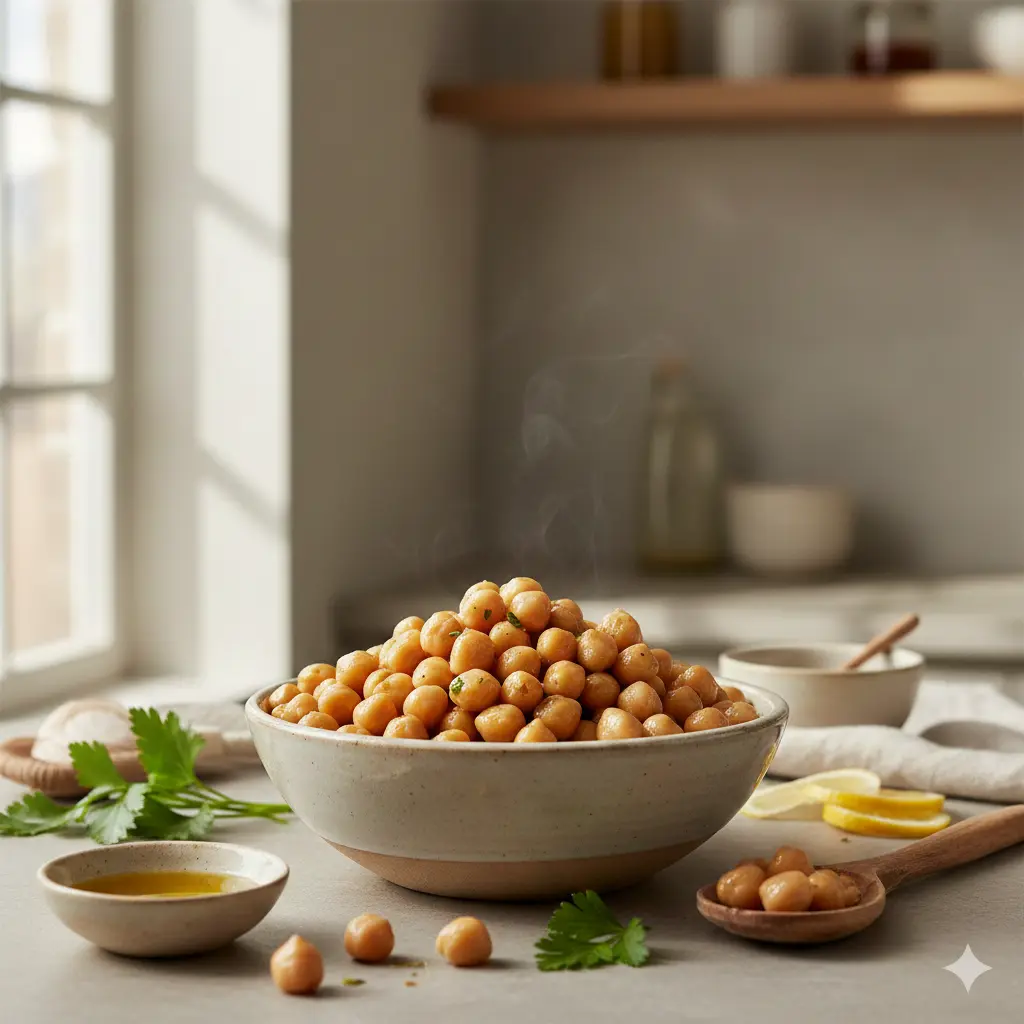
Chickpeas (also known as garbanzo beans) are one of the most nutrient-dense legumes you can eat. They provide plant-based protein, gut-friendly fiber, complex carbohydrates, and essential minerals like iron, magnesium, potassium, and zinc.
However, how you prepare chickpeas dramatically affects their nutrition, digestibility, and blood sugar impact. Some methods improve mineral absorption and reduce bloating, while others increase calories or sodium.
This expert guide explains the 5 healthiest ways to eat chickpeas, how each method affects your body, and which option is best for digestion, weight loss, blood sugar control, or muscle support.
5 Smartest Ways to Eat Chickpeas for Better Health
Short answer: Yes. Chickpeas are among the healthiest legumes when prepared correctly.
Key Health Benefits of Chickpeas
- High in plant-based protein (supports muscle and satiety)
- Rich in soluble and insoluble fiber (gut health, cholesterol)
- Low glycemic index when minimally processed
- Contain folate, iron, zinc, magnesium, and B vitamins
- Linked to improved heart health and blood sugar control
According to Harvard T.H. Chan School of Public Health, legumes like chickpeas are associated with lower risk of heart disease and type 2 diabetes when eaten regularly.
Reference: https://www.hsph.harvard.edu/nutritionsource/food-features/beans-and-legumes/
What Is the Healthiest Way to Eat Chickpeas?
The healthiest preparation depends on your goal, but methods that reduce anti-nutrients and preserve fiber are best.
At a glance:
- Best for digestion: Sprouted or pressure-cooked
- Best for weight loss: Boiled or steamed
- Best for blood sugar: Whole chickpeas, not flour
- Best for convenience: Low-sodium canned, rinsed
-
Are Boiled or Steamed Chickpeas the Healthiest?
Yes. Boiled or steamed chickpeas are the most balanced and evidence-based option.
Why boiling is healthy
- Softens fiber for easier digestion
- Preserves protein and minerals
- Keeps calorie density low
- Maintains a low glycemic response
Nutrition (½ cup cooked chickpeas)
|
Nutrient |
Amount |
|
Calories |
~135 |
|
Fiber |
~6 g |
|
Protein |
~7 g |
|
Folate |
~70% DV |
|
Iron |
~15% DV |
|
Zinc |
~20% DV |
Expert Tip: Don’t discard aquafaba
The leftover cooking liquid (aquafaba) contains soluble fiber and starches. It can replace eggs in vegan baking and foams like egg whites.
USDA nutrient reference:
https://fdc.nal.usda.gov/
-
Are Sprouted Chickpeas Easier to Digest?
Yes. Sprouting significantly improves digestibility and mineral absorption.
What sprouting does
- Reduces phytic acid, which blocks mineral absorption
- Lowers gas-producing compounds (raffinose, stachyose)
- Increases antioxidant availability
Studies show germination activates enzymes that improve protein and iron bioavailability.
Reference: https://www.ncbi.nlm.nih.gov/pmc/articles/PMC5452224/
Best ways to eat sprouted chickpeas
- Lightly cooked in soups or stir-fries
- Added to salads or grain bowls
- Avoid eating fully raw unless properly sprouted and rinsed
-
Are Roasted Chickpeas Healthy or Unhealthy?
Roasted chickpeas are healthy in moderation, but preparation matters.
Pros
- Crunchy, satisfying snack
- Retain fiber and protein
- Lower glycemic impact than chips or crackers
Cons
- Store-bought versions often contain:
- Excess sodium
- Added sugar
- Refined oils
Healthiest way to roast chickpeas
- Use boiled chickpeas
- Roast with olive oil
- Season with spices, not sugar
American Heart Association sodium guidance:
https://www.heart.org/en/healthy-living/healthy-eating/eat-smart/sodium
-
Is Hummus Healthy?
Yes, but portion size matters.
Hummus combines chickpeas with tahini (sesame paste), olive oil, lemon, and garlic.
Benefits
- Healthy fats improve nutrient absorption
- Lower blood sugar response than plain carbs
- Supports heart health
Drawbacks
- More calorie-dense than whole chickpeas
- Easy to overeat
Nutrition (¼ cup homemade hummus)
|
Calories |
Carbs |
Protein |
Fat |
|
~108 |
~12 g |
~3 g |
~5 g |
Best practice: Pair hummus with vegetables, not refined crackers.
Mediterranean diet evidence:
https://www.ncbi.nlm.nih.gov/pmc/articles/PMC5452224/
-
Is Chickpea Flour Healthy?
Yes, especially for gluten-free and high-protein baking.
Why chickpea flour stands out
- Higher protein than wheat flour
- Rich in iron, magnesium, and fiber
- Naturally gluten-free
Comparison per 100 g flour
|
Flour Type |
Protein |
|
Chickpea flour |
~22 g |
|
Whole wheat flour |
~15 g |
|
All-purpose flour |
~12 g |
Best uses
- Pancakes
- Savory flatbreads
- Protein-enriched muffins
Celiac Disease Foundation guidance:
https://celiac.org/gluten-free-living/what-is-gluten/sources-of-gluten/
Expert Checklist: How to Make Chickpeas Healthier
✔ Soak dried chickpeas 8–12 hours
✔ Rinse canned chickpeas to remove excess sodium
✔ Use pressure cooking to improve digestion
✔ Pair chickpeas with vitamin C foods for iron absorption
✔ Control portions of hummus and roasted snacks
Who Should Be Careful With Chickpeas?
Chickpeas are healthy, but not ideal for everyone.
Use caution if you:
- Have IBS or FODMAP sensitivity
- Have legume allergies
- Have kidney disease (potassium considerations)
- Eat large amounts without soaking or cooking properly
Monash University FODMAP guidance:
https://www.monashfodmap.com/
Are Chickpeas Good for Weight Loss?
Yes. Chickpeas increase fullness due to fiber and protein.
Research shows legume consumption improves weight management and appetite control.
Reference: https://www.ncbi.nlm.nih.gov/pmc/articles/PMC5188422/
Best options for weight loss:
- Boiled chickpeas
- Sprouted chickpeas
- Chickpea-based soups and salads
Frequently Asked Questions (FAQ)
Can I eat chickpeas every day?
Yes, ½–1 cup daily is safe for most people.
Are canned chickpeas unhealthy?
No, if rinsed and low-sodium.
Do chickpeas cause bloating?
Sometimes. Soaking, sprouting, or pressure cooking reduces this.
Are chickpeas good for diabetes?
Yes. They have a low glycemic index when minimally processed.
American Diabetes Association reference:
https://diabetes.org/healthy-living/recipes-nutrition/eating-well/beans
Bottom Line: What Is the Healthiest Way to Eat Chickpeas?
The healthiest chickpeas are whole, minimally processed, and properly cooked.
Best overall choices:
- Boiled or steamed chickpeas
- Sprouted chickpeas
- Homemade hummus (in moderation)
- Oven-roasted chickpeas
- Chickpea flour for balanced baking
When prepared correctly, chickpeas are one of the most powerful plant-based foods for gut health, heart health, and long-term metabolic wellness.