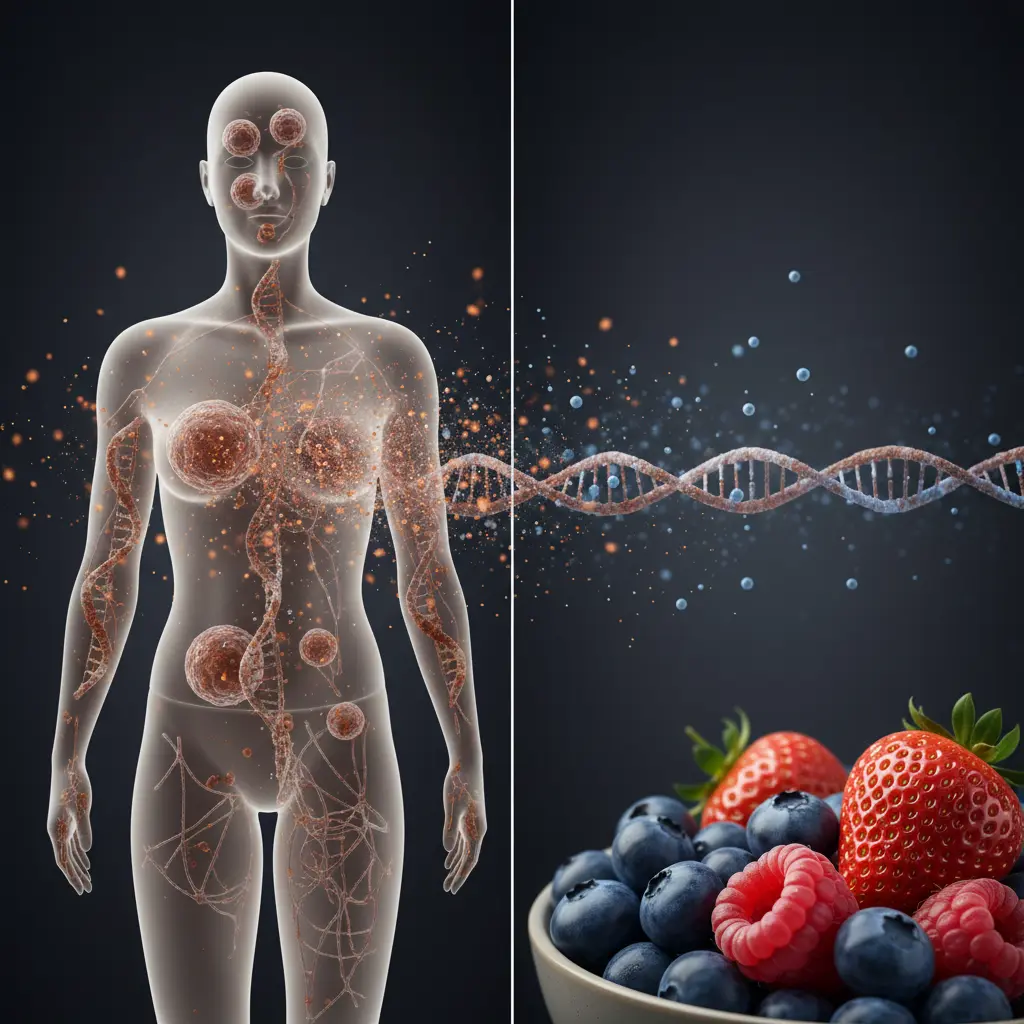
Food isn’t like magic pills. Food isn’t medicine; you swallow once and boom. It is safe for life. It nudges risk downward, over time, when your whole diet and lifestyle back it up.
And yes — science backs this. Not some random blog talk. Real journals, real data. I’ll link sources you can click through.
Why People Are Talking About Antioxidants
Ever heard someone say “eat antioxidants”? It sounds kinda vague, right?
Let’s cut through the fluff.
Antioxidants = molecules that fight oxidative stress.
Oxidative stress is like tiny rust inside your cells.
Too much rust = damage. Over years, that damage ties to cancer, heart disease, dementia, aging faster, etc.
Your body makes some antioxidants. But food gives you a boatload more.
Authority check:
National Institutes of Health overview on oxidative stress and antioxidants
https://ods.od.nih.gov/factsheets/Antioxidants‑HealthProfessional/
Free Radicals & Oxidative Stress
Picture this:
Think of your body like a bustling city. Your cells? They’re the cars, keeping traffic flowing. Free radicals? They’re the reckless scooters weaving through the streets. They do have a purpose — like helping your immune system or sending important signals — but when there are too many of them, chaos happens. Bump into the wrong place, cause a pile-up, and that’s what scientists call oxidative stress.
And oxidative stress:
damages DNA
messes with cell membranes
disrupts protein function
leads to chronic inflammation
These are the same things scientists see (in studies) at the roots of:
heart disease
cancer initiation and progression
Alzheimer’s and other neurodegenerative disorders
This isn’t just breakfast table talk — it’s a legit biology process.
Authority check:
Free radicals & disease link (NIH)
https://pubmed.ncbi.nlm.nih.gov/24859202/
Alright — So Which Fruits Help?
Let’s get to the good stuff. The 3 fruits that have the most evidence linking them with lower risk markers for big chronic diseases:
Blueberries
Strawberries
Raspberries
These aren’t random picks. They show up over and over in observational studies and controlled trials.

Blueberries — The Tiny Powerhouse
What’s Inside Them?
Component Benefit
Anthocyanins are potent antioxidants; they may improve blood vessel function
Vitamin C is an immune support and antioxidant
Fiber helps blood sugar and gut health
Blueberries are the rockstars. That deep blue/purple color? That’s not cosmetic. It’s anthocyanins — the molecules linked to:
improved endothelial function (better blood flow)
lower LDL oxidation
Better memory in older adults
One study even found that people who ate berries weekly had slower cognitive decline.
Authority check:
Blueberries & cognition research
https://pubmed.ncbi.nlm.nih.gov/30595919/
Not “guarantee you won’t get dementia.” No fruit does that. But the markers? Yup.
Strawberries — More Than Just Pretty
Strawberries are super tasty, and they pack:
high vitamin C (often more than oranges by weight)
polyphenols
fiber
trace minerals like manganese
They help reduce inflammation and markers tied to heart disease.
Plus — they’re cheap. Fresh. Widely available. Not only for fancy smoothie bowls.
Authority check:
Strawberries and heart health
https://pubmed.ncbi.nlm.nih.gov/33365934/
Raspberries — The Underestimated One
Raspberries are a bit underrated in mainstream nutrition talk (compared to blueberries), but they deliver:
Ellagitannins — antioxidants that gut microbes convert into neuroprotective compounds
lots of fiber — great for gut health, blood sugar control
If your gut is healthy, your brain and heart benefit too. That’s science, not hype.
Authority check:
Ellagitannins & gut health
https://pubmed.ncbi.nlm.nih.gov/28401709/
So, How Much Should You Eat?
Here’s the part most articles totally miss:
There’s no single “magic number.”
But studies often use:
1/2 to 1 cup of berries per day
or ≥3 servings per week
That’s enough to see associations with better markers.
Not perfect. Not a cure‑all. But helpful.

What About Other Antioxidant Foods?
Because I know someone’s already yelling “What about pomegranate! ORAC scores! Acai bowls!”
Yes — there are tons of antioxidant foods:
pomegranate
red grapes
dark chocolate (70%+ cocoa)
green tea
spinach
blackberries
But if you’re starting from zero… berries are cheap, common, and studied a lot.
Why Fruit Matters — But Diet Matters More
This is super important.
If you eat berries but also:
smoke
drink heavily
Eat tons of processed foods,
sit all day
…berries won’t undo that.
Food lowers risk factors over time — it does not erase disease.
The real benefit happens when fruit is part of an overall healthy pattern, like:
Mediterranean diet
DASH diet
plant–forward eating
Authority check:
Mediterranean diet & chronic disease prevention
https://pubmed.ncbi.nlm.nih.gov/30919993/
Expert’s Little Checklist
Daily habits that matter more than any single food:
- Eat at least 5 servings of fruit/veg a day
- Stay physically active (150 min/week)
- Limit added sugar
- Avoid smoking
- Manage stress and sleep
- Keep a healthy weight
- Eat whole grains, legumes, and nuts
Berries are part of this — not the whole story.
FAQ
Q: Can these fruits prevent cancer?
A: No food can guarantee prevention. But diets high in antioxidative foods are linked with lower risk markers in dozens of studies.
Q: Does freezing berries reduce benefits?
A: Only slightly. Frozen berries still contain most antioxidants and often cost less.
Q: Is fruit sugar bad for you?
A: Whole fruit sugar comes with fiber and nutrients. It’s not the same as added sugar. But portion control still matters, especially if you have blood sugar issues.
Q: Should I take antioxidant supplements instead?
A: Whole foods are better — they contain a mix of compounds that work together. Supplements don’t have the same evidence.
Q: What if I’m allergic to berries?
A: Other antioxidant foods like citrus, pomegranate, spinach, tea, and nuts can help.

A Little Personal Take (Because Why Not?)
Okay, here’s something you won’t see in every nutrition article:
I used to hate blueberries. Tasted like blueberry cardboard or some fruity lie.
Then I started freezing them, sprinkling them on oatmeal, yogurt, or straight from the bag while binge‑watching something dumb on Netflix. Suddenly, they were one of the easiest few bites of the day.
Not a miracle cure, not a fad. Just… a tiny good habit in a big, messy life.
And honestly? I’m here for that.
Bottom Line
Berries (blueberries, strawberries, raspberries) are rich in antioxidants.
These compounds help reduce oxidative stress linked to cancer, heart disease, and dementia.
Eating them regularly — as part of an overall healthy diet — is associated with better health markers.
No food is a cure. But they matter. Big time.
Science supports the associations — not exaggerated guarantees.