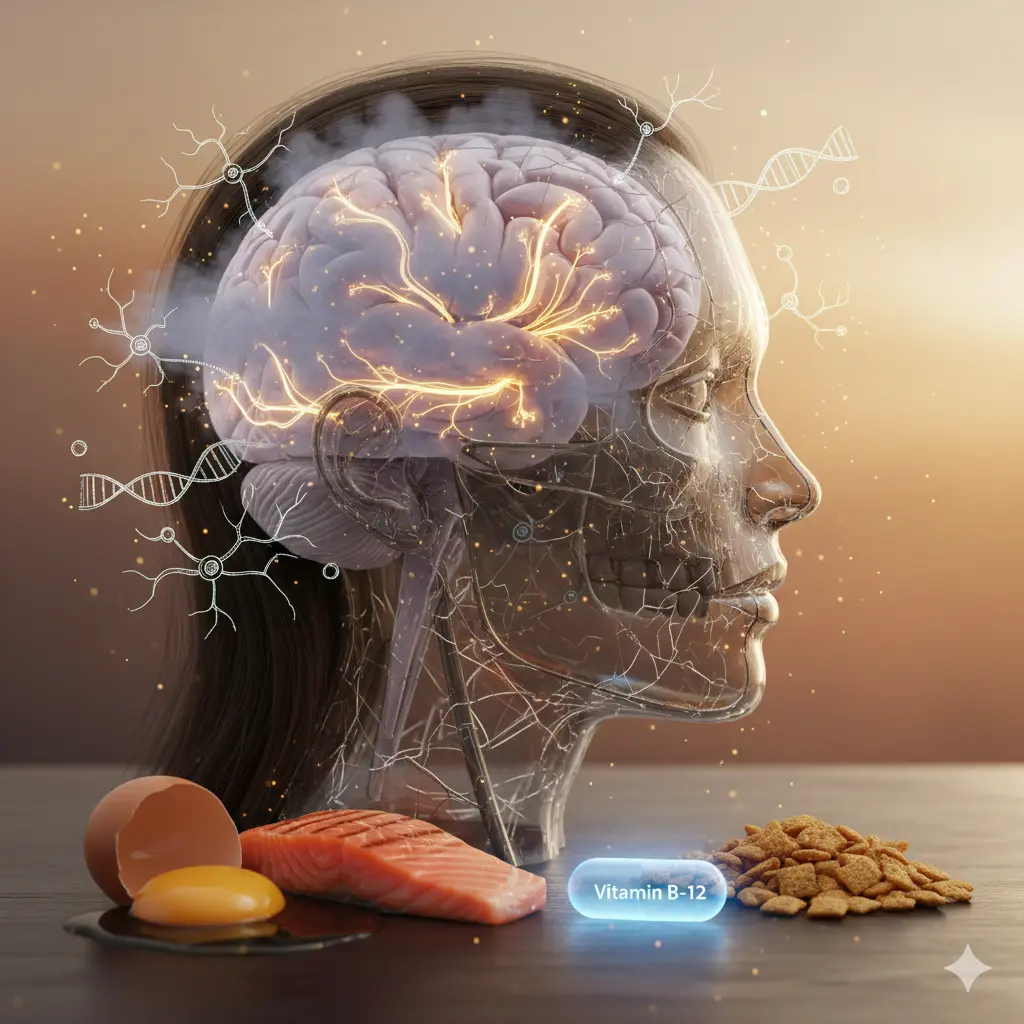
Okay, so let’s talk about something almost nobody talks about — but honestly, probably should: Vitamin B‑12. Yeah, that weird little nutrient hiding out in eggs, fish, and fortified cereal that somehow stops your brain from… well, turning into mush. Seriously. You don’t notice it until you do — and then suddenly, your thoughts are all fuzzy, your memory’s playing tricks on you, and you’re wondering if you left your brain back in bed.
If you’ve been feeling kind of… foggy? Or like you can’t remember where you put your keys for the third time today… Maybe it’s not just stress, too much coffee, or that endless Netflix binge. Maybe — just maybe — it’s your B‑12 running low. And trust me, it happens way more than people think.
Brain Sluggish? Check Your B‑12 Levels Now
- Fatigue that won’t quit
- Brain fog — like someone stuffed your thoughts in a pillow
- Memory lapses (“Wait… what was I saying?”)
- Tingling in hands or feet
- Mood swings or depression
- Trouble balancing like a newborn giraffe
- Sometimes anemia shows up, but sometimes it doesn’t
Basically, your nervous system starts misfiring. And if left untreated? Could lead to long-term brain issues. Seriously.
Reference: NIH NHLBI: Vitamin B12–Deficiency Anemia
How Your Body Absorbs B 12 (And Why It Can Go Wrong)
Here’s a little biology — but I promise, it’s quick:
Here’s basically how your body deals with B‑12 — kind of like a tiny relay race inside you:
Step What Happens
Step 1: Food release. Stomach acid grabs B‑12 and separates it from the food you just ate.
Step 2: Intrinsic factor binding B‑12 hooks up with a special protein your stomach makes — like, “Okay, you’re coming with me.”
Step 3: Absorption Your small intestine snatches the B‑12 and sends it off to do its brain-boosting magic.
So here’s the kicker: if your stomach acid is low, or that intrinsic factor protein decides to take the day off… no matter how many eggs, fish, or fortified cereals you eat, your body just won’t absorb the stuff. Frustrating, right? Like, you’re doing everything “right” and your brain is still like, meh.
Reference: Cleveland Clinic: Vitamin B12 Deficiency
Can B12 Actually Improve Your Brain Function?
Yes, and yes-ish. Here’s the deal:
- Myelin formation = better nerve signaling
- Neurotransmitter production = better mood, motivation, focus
- Homocysteine breakdown = less oxidative stress in blood vessels, brain included
But… some studies on older adults with “borderline normal” B 12 levels haven’t shown big improvements in cognition just from supplements. Bottom line: treat confirmed deficiencies early. That’s when your brain really thanks you.
Reference: Cochrane Review: B12 & Cognitive Function
How Much B12 Do You Actually Need?
Age/Group Daily Recommended Intake
Adults 19-50 2.4 mcg
Pregnant 2.6 mcg
Breastfeeding 2.8 mcg
51+ 2.4 mcg (often need fortified foods/supplements)
B‑12 Deficiency Could Be Ruining Your Memory
Honestly? Many people don’t hit these numbers without supplements if they aren’t eating a lot of animal products.
Reference: NIH Office of Dietary Supplements
Foods That Pack a B12 Punch
- Salmon, tuna, trout (yes, fish!)
- Beef, chicken
- Eggs
- Dairy (milk, cheese, yogurt)
- Fortified cereals and plant milks for vegans
- Nutritional yeast — sprinkle that stuff on everything
How Do You Know You’re Deficient?
Your doctor will probably order:
- Serum B 12 test
- Complete blood count (CBC)
- Sometimes methylmalonic acid or homocysteine (super sensitive tests)
Here’s the kicker: normal serum B12 doesn’t always mean your brain is happy. Always look at symptoms and risk factors too.
What About Treatment?
- Diet first – more eggs, fish, fortified foods.
- Supplements – pills are usually fine.
- Injections – for people who can’t absorb B 12 orally or have severe deficiency.
Pro tip: treatment works best if you catch it early. Brain fog, fatigue, mood swings… they can improve surprisingly fast once your levels are back to normal.
Quick Expert Checklist
✅ Feeling constantly tired?
✅ Forgetful?
✅ Tingling or numbness in hands/feet?
✅ Mood swings or depression?
✅ Blood tests showing macrocytic anemia?
If you checked any of these — get your B 12 checked. No shame, it’s super common.
Bottom Line
Vitamin B 12 is one of those nutrients that quietly runs your brain, and when it dips, your mental life starts feeling… off.
The good news? It’s testable, treatable, and preventable. Eat the right foods, supplement if needed, and catch deficiencies early. Your brain will thank you — and your keys will probably stop vanishing into thin air.
References:
- NCBI StatPearls: Vitamin B12 Deficiency
- NIH NHLBI: Vitamin B12–Deficiency Anemia
- Harvard Health: Vitamin B12 A-to-Z
- Cochrane Review: B12 & Cognitive Function
- Cleveland Clinic: Vitamin B12 Deficiency
- NIH Office of Dietary Supplements
FAQ
1) Can low B‑12 really make me feel foggy and forgetful?
Oh yeah — this isn’t just in your head (well, technically it is, but you get what I mean). Low B‑12 can slow down how your brain cells communicate and mess with neurotransmitters like dopamine and serotonin, so things like focus, memory, and mood take a hit. People often describe it as “brain fog” — like thinking through cotton balls — and it can show up before any big blood test alerts you. So if your head feels fuzzy more often than not, it’s worth talking to someone and checking those levels.
2) What are the most common signs of a B‑12 deficiency?
This one’s sneaky because symptoms can show up slowly — you might think you’re just stressed or aging or need more coffee. But common red flags include:
-
Constant fatigue and weakness
-
Tingling or numbness in hands/feet
-
Trouble with balance or walking
-
Memory slip‑ups, confusion
-
A sore, red tongue or mouth issues
It’s a mix of physical, neurological, and even psychological signs, so if several things feel “off,” it’s worth a check
3. Do I need B‑12 supplements, or can food fix it?
If your levels are only a bit low, food sources like eggs, fish, dairy, and fortified cereals can help — especially if you’re consistent with meals. But here’s the thing: if your body isn’t absorbing B‑12 properly (which happens with age or gut issues), even eating all the salmon in the world won’t fix it. In those cases, doctors often recommend supplements — sometimes pills, sometimes shots — because they bypass the whole stomach absorption problem. A blood test is the only way to know what you need.
4) Can too much B‑12 be harmful?
This one’s good to clear up because a lot of people think “vitamin” means “can’t hurt.” B‑12 is water‑soluble, so excess usually gets flushed out in urine. That means toxicity is rare. But super high doses — like way higher than recommended — can cause weird things like acne, rashes, or stress on kidneys if you have other health issues. Bottom line: don’t just mega‑dose because you read something online — talk to a doc about what’s right for you.
5) How long does it take to feel better after fixing a B‑12 deficiency?
This one varies a lot — because bodies are weird and unique. Some people start feeling more energetic and mentally clear within days or weeks after treatment starts. Others — especially if symptoms have been going on for a while — might take months before they feel like themselves again. There are stories of people feeling hopeful real changes in a few months, and others taking longer. The key is sticking with the plan your healthcare provider recommends and keeping an eye on your symptoms over time.