Yeah, It Sounds Too Simple — But the Science Is Weirdly Convincing
Let’s be honest for a second.
When you hear a headline like “Common fruit flushes out fat and sugar and cuts heart attack risk,” your first reaction is probably an eye roll. Because we’ve all been here before. One week, it’s blueberries. Then it’s dark chocolate. Then red wine (sadly… still no).
But grapes?
Grapes May Help Prevent Heart Attacks
Just… regular grapes you toss in your cart without thinking?
Turns out, yeah. They might actually be doing something. And not in a vague “antioxidants are good” way either. Real mechanisms. Real human data. Some animal studies, too, sure. But enough signals that nutrition researchers are paying attention.
Let’s talk about what’s really going on here, because grapes are good for Health
Why Are Scientists So Suddenly Interested in Grapes?
Part of it comes down to the gut. Everything does these days.
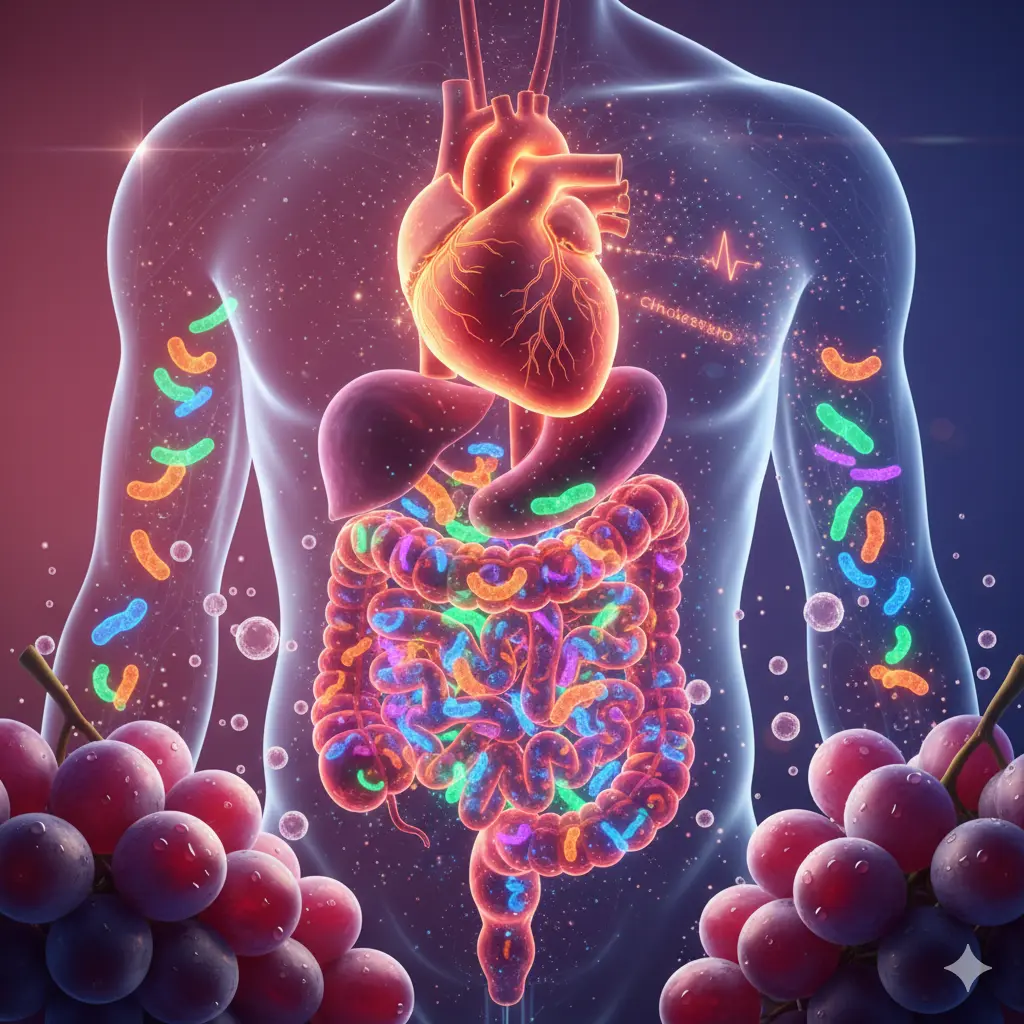
Your gut microbiome — the trillions of bacteria living inside you — isn’t just about digestion anymore. It’s involved in cholesterol levels, inflammation, blood sugar control, and even how your blood vessels behave. Basically, heart health doesn’t start with your heart at all. It starts way upstream. In your gut.
Snack on Grapes, Protect Your Heart Naturally
Grapes are packed with polyphenols — little plant compounds that your gut bacteria actually love. Once those bacteria start shifting, everything else starts moving too. Cholesterol. Bile acids. Even those inflammation markers that usually just hang out quietly… until suddenly, they don’t.
It’s not dramatic. Nothing happens overnight. It’s more like a slow domino effect. Subtle, steady, but real.
They added grapes. About 40 a day.
Nothing else changed.
Four weeks later?
Boom. Changes.
Not dramatic miracle stuff. But measurable, meaningful shifts.
What actually changed:
• Gut bacteria became more diverse
• LDL (“bad”) cholesterol dropped by nearly 8%
• Bile acids linked to cholesterol absorption dropped by 40%+
Polyphenols in Grapes That Fight Cholesterol
Bile acids are basically your body’s helpers for digesting fat. They grab onto fats in the gut and help shuttle them into the bloodstream. The catch? They also make it easier for cholesterol to get absorbed along for the ride.
So when bile acid activity drops, less cholesterol ends up hanging around in your blood. That matters over time. Because that leftover cholesterol is what slowly builds plaques inside arteries — and those plaques are what eventually trigger heart attacks and strokes.
Why?
Because people with more of it tend to:
• Have better insulin sensitivity
• Lower inflammation
• Less visceral fat
• Healthier cholesterol profiles
It basically helps keep the gut lining strong and reduces metabolic chaos. Which, yeah, is a technical term I just made up — but you get the idea.
Grapes seem to feed this bacterium. Not artificially. Not with supplements. Just… naturally.
That’s rare.
How Grapes Boost Gut Health and Heart Power
Do Grapes Really “Flush Out” Fat and Sugar?
Short answer: no, not literally.
Your body already has organs for flushing things out. They’re called the kidneys and liver. They’re doing fine.
But here’s what grapes do seem to do instead — and this is more interesting.
They change how your body processes fats and sugars.
Animal studies show:
• Less fat accumulation in the liver
• Better fatty acid metabolism
• Improved insulin response
Human studies suggest:
• Reduced cholesterol absorption
• Better gut-driven metabolic regulation
So when headlines say “flush out,” what they mean (poorly) is “shift metabolic pathways in a healthier direction.”
Not as sexy. Much more accurate.
What About Longevity, Brain Health, and All That Big Stuff?
This is where things get… promising but incomplete.
Researchers like Dr. John Pezzuto at Western New England University studied grape compounds in mice fed high-fat Western-style diets. The mice that got grapes:
• Lived longer
• Had less fatty liver disease
• Showed better cognitive function
• Had lower oxidative stress
The team estimated the lifespan extension might translate to several extra human years. That’s a big “might.” Mouse years are not human years. Anyone telling you otherwise is overselling it.
Still, the brain benefits are pretty intuitive. Especially when you think about how information, metabolism issues, and Alzheimer’s risk are all tangled together. So many grapes are we actually talking about.
Not a crazy amount.
Most studies land around:
• 1–2 servings per day
• Roughly 30–40 grapes
That’s it.
Fresh is best. Frozen works too. Juice? Not so much. Juice strips out the fiber and concentrates the sugar. Different metabolic response entirely.
Personally, I toss a handful in the freezer and snack on them at night instead of something ultra-processed. Not a miracle habit. Just a better one.
A Quick Reality Check (Because This Matters)
Grapes are not a replacement for:
• Statins
• Blood pressure meds
• A generally decent diet
They’re not magic, and they’re not for everyone.
If you’ve got diabetes, insulin resistance, or just need to keep an eye on sugar, portion size actually matters. Grapes are natural sugar, sure… but sugar is still sugar. Don’t go thinking you can eat a whole bunch and call it a free pass.
Context is everything.
Expert Checklist: Should You Add Grapes to Your Diet?
✔ You eat low fiber most days
✔ You want a simple heart-health upgrade
✔ You snack a lot and want better options
✔ You’re trying to support gut health
⚠ Watch portions if blood sugar is an issue
⚠ Skip juice — whole fruit only
The Bottom Line (No Drama, Just Facts)
Grapes aren’t flashy. They’re not rare. They’re not expensive.
And maybe that’s why this research is so interesting.
A simple fruit. Small daily habit. Measurable shifts in gut bacteria and cholesterol in under a month. That’s nothing. Especially in a world where heart disease is still killing millions every year.
No detox myths. No miracle claims. Just quiet, consistent biology doing its thing.
Sometimes that’s the best kind of health advice.
Authoritative References (Plain Text)
Nutrients Journal (MDPI)
https://www.mdpi.com/journal/nutrients
UCLA Health – Nutrition Research
https://www.uclahealth.org
American Heart Association – Diet & Cholesterol
https://www.heart.org
National Institutes of Health – Research on the Gut Microbiome
https://www.nih.gov
World Health Organization – Info on Cardiovascular Disease
https://www.who.int