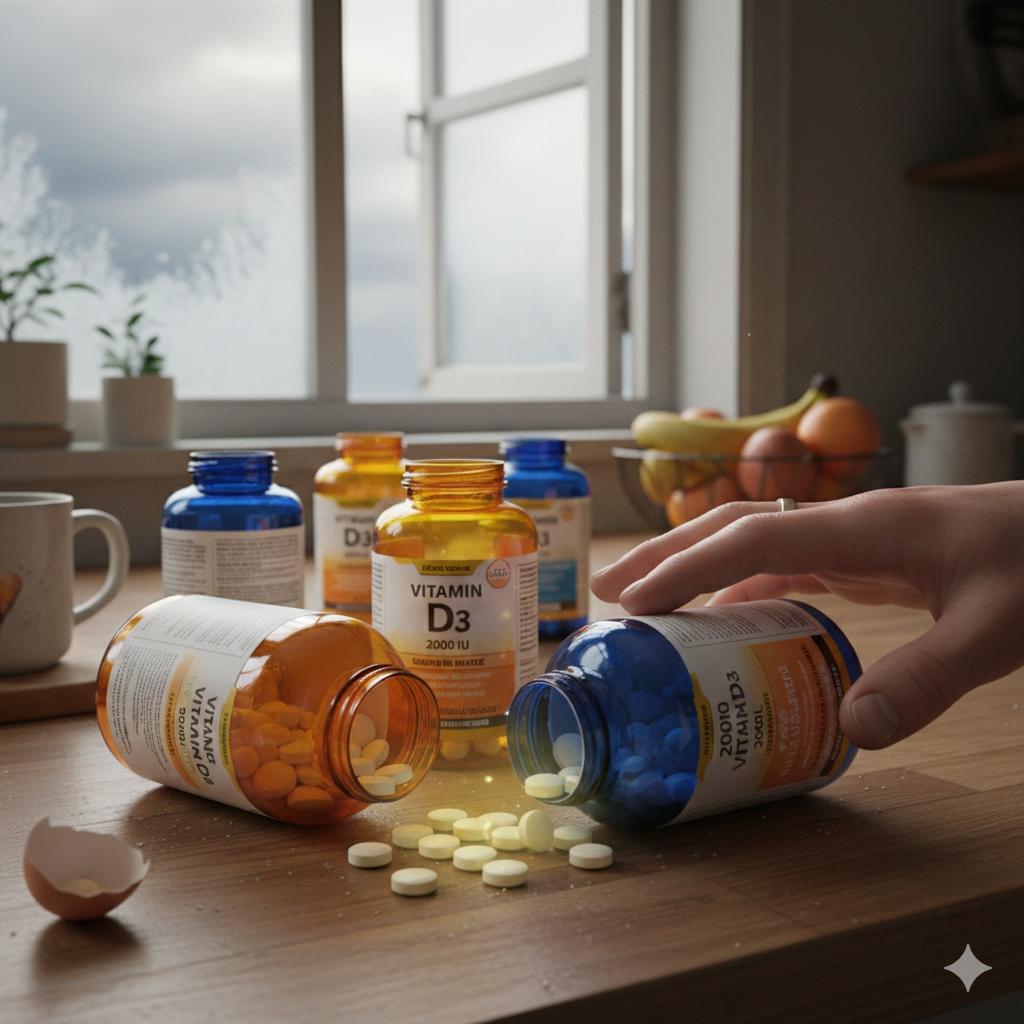
Vitamin D has quietly become one of those supplements people take on autopilot. Winter rolls in, the sun more or less vanishes, someone on TV says “everyone should be taking it,” and suddenly half the country is knocking back tiny tablets every morning with their coffee. No questions asked.
Seems harmless enough, right?
Well… mostly. But not always.
Dr Zoe Williams — an NHS GP and a familiar face on ITV’s This Morning — recently raised a red flag that’s actually worth pausing for. Not in a panic, throw-your-supplements-away kind of way. More like a calm, sensible “hang on a second, let’s read the label” moment.
Because yes, vitamin D matters. It really does.
But yes, you can take too much of it.
Vitamin D Overdose Could Be Harming
And honestly? More people probably are than they realise.
- Strong bones
- Teeth that don’t crumble
- Muscles that actually work
When your body doesn’t get enough vitamin D, calcium just… doesn’t get absorbed properly. At first, you probably won’t notice a thing. No warning signs. No flashing neon alerts. But over time? Well, your body starts reminding you, in ways you definitely don’t want. In kids, it can show up as soft bones — rickets. In adults, it usually sneaks in as that annoying bone ache or muscle weakness that doctors call osteomalacia. Not fun. Not rare either. Honestly, way more common than most people think.
And yeah, in the UK, just stepping outside for a bit of sun? Forget it. Between October and March, the sun’s basically hiding, and most of us are wrapped up indoors like giant, cozy burritos. That’s why the NHS recommends most people think about taking a daily vitamin D supplement during autumn and winter. Nothing over the top. Just enough to keep you topped up and feeling normal.
Vitamin D Supplements: How Much Is Safe?
That’s it. Not a megadose. Not a “more is better” situation. Just enough to keep levels ticking along nicely.
Some groups are advised to take vitamin D all year round, including:
- Children aged 1–4
- Babies who aren’t getting enough formula
- People with darker skin
- Anyone who doesn’t get much sun
Still, the dose doesn’t suddenly jump into the thousands.
So… Can You Take Too Much Vitamin D?
Short answer? Yes.
Longer answer? Also yes, and it happens more easily than you might think.
Dr Zoe Williams explained it on This Morning in a way that stuck with a lot of viewers:
“There are certain vitamins we don’t pee out if we take too much. They’re stored in the fat — vitamins A, D, E and K. These can build up in your system.” That one detail alone explains half the problem.
Why Your Vitamin D Routine Might Backfire
Vitamin D is fat-soluble, not water-soluble. So if you keep taking high doses day after day, your body doesn’t just flush out the extra and move on. It hangs onto it. Stores it away. Quietly. Patiently. Until, eventually, it’s had enough.
- Your kidneys
- Your heart
- Your digestive system
Dr Williams put it plainly:
“That can make you feel really unwell.”
Understatement of the year.
Symptoms of Vitamin D Toxicity (They’re Not Subtle Forever)
Vitamin D toxicity doesn’t usually hit overnight. It creeps in.
Early signs might include:
- Feeling nauseous for no clear reason
- No appetite
- Constipation
- Just feeling off
More serious symptoms can develop over time:
- Constant thirst
- Needing to pee all the time
- Kidney stones
- Confusion or heart rhythm issues
At that point, it’s no longer a “maybe cut back” situation. It’s a medical one.
Authoritative reference (plain text):
https://www.ncbi.nlm.nih.gov/books/NBK557876/
How Much Vitamin D Is Too Much, Exactly?
This is where numbers matter.
Intake Type Daily Amount
NHS recommended dose 10 micrograms (400 IU)
Upper safe limit (adults) 100 micrograms (4,000 IU)
Toxicity risk Long-term intake above this
Taking ten times the recommended amount — something Dr Williams specifically warned about — pushes people into risky territory fast.
And yes, those doses are very easy to find on shop shelves and online.
Authoritative reference (plain text):
https://www.gov.uk/government/publications/sacn-vitamin-d-and-health-report
Why So Many People Accidentally Overdo Vitamin D
Honestly? Marketing plays a role.
High-dose vitamin D is often sold as:
- “Immune boosting”
- “Energy enhancing”
- “Bone strengthening”
Sounds good. Sounds helpful. Sounds safe.
But people forget to check:
- Their multivitamin
- Their standalone vitamin D
- Their calcium supplement
Stack those together, and suddenly you’re way over the line without realising it.
Dr Williams breaks it down like this (and it’s a good framework):
- People who genuinely need supplements
- People who take them as insurance
- People who are unknowingly taking harmful levels
A lot of us fall into group three.
Who Should Talk to a Doctor Before Taking Vitamin D?
You don’t need a GP appointment just to take a standard winter supplement. But you should check in if you:
- Have kidney problems
- Take calcium supplements
- Are pregnant or breastfeeding
- Have conditions like sarcoidosis or parathyroid disorders
- Want to take more than 10 micrograms daily
Sometimes a simple blood test can save you months of trouble.
A Very Realistic Vitamin D Safety Checklist
Not medical. Just sensible.
Before you keep taking that supplement:
- ✔ Check the dose (micrograms and IU)
- ✔ Add up all sources of vitamin D you’re taking
- ✔ Avoid high doses unless advised by a professional
- ✔ Take it with food — absorption is better
- ✔ Remember: more ≠ better
Is Vitamin D From Sunlight or Food Safer?
Yes. And yes.
Vitamin D toxicity does not happen from sunlight. Your body regulates how much it makes. Same goes for food.
Natural sources include:
- Sun exposure
- Oily fish
- Egg yolks
- Fortified cereals
Supplements are the wildcard. Helpful. But powerful.
Does more vitamin D mean better immunity?
No. There’s a limit to the benefit. Once you hit it, taking more doesn’t help — it just raises the risk. Used carelessly, especially at high doses, it can quietly cause real problems.
Dr Zoe Williams’ advice boils down to something refreshingly simple:
Be informed. Be moderate. And don’t assume more is better just because the label says “extra strength.”
Authoritative References (Plain Text)
- NHS Vitamin D Guidance
https://www.nhs.uk/conditions/vitamins-and-minerals/vitamin-d/
- UK Government SACN Vitamin D Report
https://www.gov.uk/government/publications/sacn-vitamin-d-and-health-report
- NIH Vitamin D Fact Sheet
https://ods.od.nih.gov/factsheets/VitaminD-Consumer/
- StatPearls – Vitamin D Toxicity